
Snorkeling Bali
Complete Snorkeling Bali Information Guide
Bali offers shore, boat and island snorkeling around Amed, Padang Bai, Nusa Penida, Nusa Lembongan, Tulamben, Menjangan and Pemuteran.
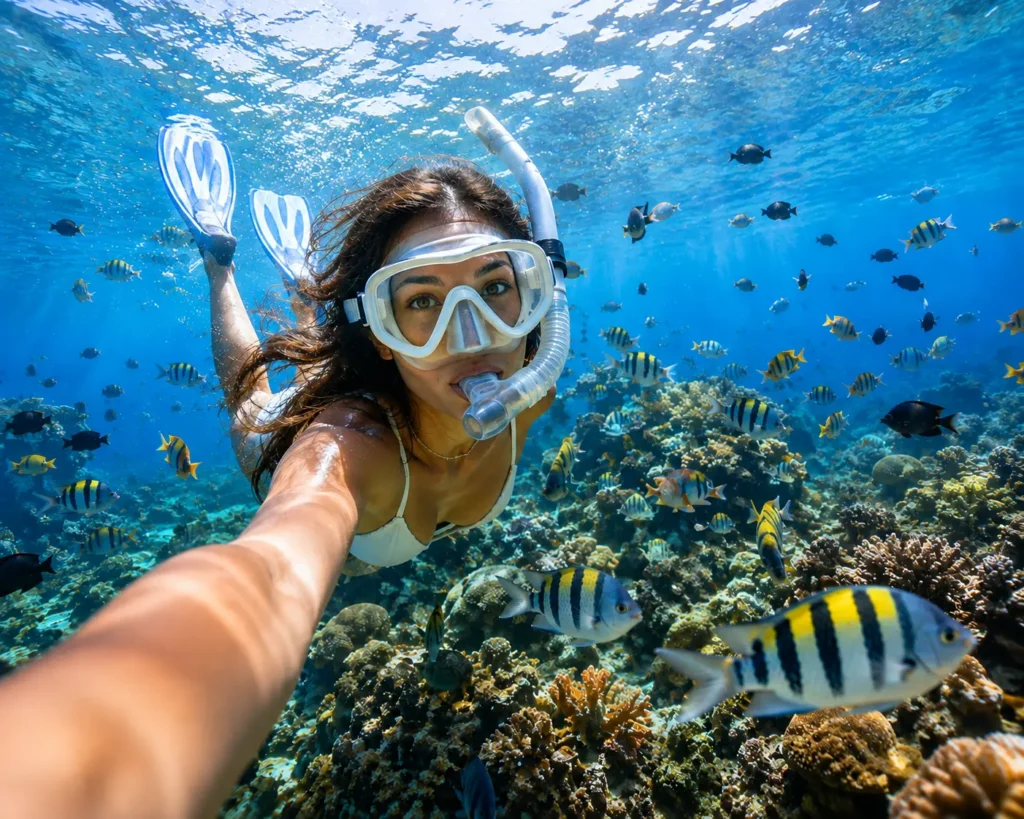
SNORKELING BALI
Explore This Guide
Jump directly to the information you need.
Choosing the Right Snorkeling Area
Beginners and families are usually better matched to sheltered east- or north-Bali locations in suitable conditions. Nusa Penida is a more exposed open-water boat experience and is better for confident swimmers.
The best choice depends on four things: sea conditions, swimming confidence, travel time, and whether you prioritise easy reef access, coral, wrecks or the possibility of seeing manta rays.
Snorkeling Bali Quick Facts
| Practical detail | What to expect |
|---|---|
| Main snorkeling areas | Amed, Padang Bai, Nusa Penida, Nusa Lembongan, Tulamben, Menjangan and Pemuteran |
| Best first choice for beginners | Amed or a well-managed Padang Bai trip when conditions are suitable |
| Best shore snorkeling | Jemeluk Bay and Lipah Beach around Amed; selected Tulamben sites are also shore-accessible |
| Best for manta opportunities | Nusa Penida, with sightings never guaranteed |
| Best for coral-focused snorkeling | Menjangan is a strong option, particularly when staying in north-west Bali |
| Typical actual snorkeling session | Often around 30–60 minutes per water session |
| Total trip duration | About 2–4 hours locally; most of a day when long transfers or island boats are involved |
| Typical advertised prices | Some local/shared products start around IDR 180,000–250,000; fuller day-trip formats commonly cost IDR 400,000–1,100,000+; private options can cost substantially more |
| Swimming ability | Strongly recommended; open-water trips require greater confidence |
| Minimum age | No universal Bali-wide rule; operator policy, equipment fit and conditions vary |
| Advance booking | Recommended for Nusa Penida, Menjangan, private boats, families and fixed transport arrangements |
| Wildlife guarantee | None; mantas, turtles and other marine animals move naturally |
Which Snorkeling Area Is Right for You?
| If you want... | Start with... |
|---|---|
| Easy access, beginners or families | Amed — especially Jemeluk Bay or Lipah Beach in suitable conditions |
| A convenient guided boat trip | Padang Bai / Blue Lagoon |
| An adventurous open-water trip and manta opportunities | Nusa Penida — best for confident swimmers |
| Reef-focused snorkeling while staying in north-west Bali | Menjangan / Pemuteran |
Is Snorkeling in Bali Worth It?
Yes, when the location matches your ability and the sea conditions on the day.
Bali offers very different snorkeling environments within one destination: easy-access reefs around Amed, short boat trips around Padang Bai, wreck snorkeling at Tulamben, coral-focused trips around Menjangan and open-water wildlife experiences near Nusa Penida.
It is particularly suitable when:
- You want underwater access without scuba certification: snorkeling requires less equipment and preparation than diving.
- You enjoy marine life and reefs: Bali offers several distinct reef environments rather than one single snorkeling area.
- You are travelling with mixed interests: some locations allow snorkelers and divers to use the same general base.
- You prefer a flexible activity: shore snorkeling in Amed can be considerably simpler than a full island excursion.
It may be better to skip or change the plan when:
- You cannot swim and the trip uses exposed open water: a flotation vest does not remove the risk of panic, current or separation.
- You dislike boats or become severely seasick: Nusa Penida, Lembongan and Menjangan involve boat travel.
- You expect guaranteed wildlife: manta rays, turtles and other animals cannot be promised.
- Conditions are unsuitable: a famous snorkeling site is not worth entering when the operator considers the water unsafe.
Best Snorkeling Locations in Bali
Amed is the strongest all-round choice for accessible snorkeling; Padang Bai is convenient for organised beginner trips; Nusa Penida suits confident swimmers seeking a more adventurous open-water experience.
| Area | Best for | Main limitation |
|---|---|---|
| Amed | Shore reefs, beginners, families, flexible local snorkeling | Long road journey from many southern Bali resorts |
| Padang Bai | Blue Lagoon, Tanjung Jepun, guided short-boat trips | Quality and visibility vary with daily conditions |
| Nusa Penida | Manta opportunities, multiple reefs, adventurous boat trips | Open water, currents, swell, boat traffic and no wildlife guarantee |
| Nusa Lembongan | Reef trips and access to nearby Penida-area sites | Usually requires fast-boat and local-boat logistics |
| Tulamben | USAT Liberty wreck and shore-based underwater scenery | Rocky entry and less beach-like setting |
| Menjangan | Coral walls, reef-focused snorkeling and quieter surroundings | Remote north-west location and required boat access |
| Pemuteran | Relaxed coastal stay, local reefs and Menjangan access | Long transfer from southern Bali |
EAST BALI SNORKELING AREA
Amed Snorkeling
Jemeluk Bay and Lipah Beach are the most practical starting points for most visitors, with additional sites accessible by local outrigger boat.
Jemeluk Bay
Jemeluk is useful for visitors who want straightforward shore access, reef fish and the option of local equipment rental or guided snorkeling. Conditions still need checking because wind, surface movement and boat traffic vary.
Lipah Beach
Lipah provides another practical shore-snorkeling base with reef areas close to the coast. It suits visitors who prefer to stay in Amed and snorkel without turning every water session into a full organised day tour.
Japanese Shipwreck Area
The small wreck south of the main Amed area sits close enough to shore to be visited by snorkelers in suitable conditions. It is commonly included in local multi-stop trips together with other reef areas.
Amed is especially good when snorkeling is an important part of your holiday. Staying locally gives you more flexibility to choose a calmer morning rather than spending many hours driving from southern Bali for one fixed session.
EAST BALI SNORKELING AREA
Padang Bai & Blue Lagoon Snorkeling
Yes. Blue Lagoon and nearby Tanjung Jepun are practical choices when you want an organised snorkeling trip without travelling as far as Amed or Menjangan.
Most trips depart locally from Padang Bai by boat and visit more than one snorkeling site. Equipment and a guide are commonly included, while hotel pickup and lunch depend on the selected package.
- Good for beginners: many operators specifically structure these trips for first-time snorkelers.
- Convenient from Ubud and Sanur: road travel is generally more practical than reaching far-eastern or north-western Bali.
- Simple boat format: the local boat transfer is short compared with a Nusa Penida excursion.
- Conditions still matter: current, surface movement, visibility and boat traffic can change the experience.
Choose Blue Lagoon for convenience and guided access, not because the words “Blue Lagoon” guarantee perfectly clear or completely calm water every day.
ISLAND SNORKELING AREA
Nusa Penida Snorkeling
Nusa Penida can provide one of Bali's most memorable snorkeling trips, but it is not automatically the best choice for beginners or weak swimmers.
Trips may visit Manta Bay, Manta Point, Crystal Bay, Gamat Bay, Wall Point or alternative sites chosen according to sea and weather conditions. Some products begin on Nusa Penida, while others include fast-boat transport from mainland Bali.
Expect the possibility of:
- Open-water entry: you may enter directly from a boat where you cannot stand.
- Current and swell: conditions vary by site and tide.
- Boat traffic: popular snorkeling areas can have several vessels operating nearby.
- Site changes: the planned location may be changed when conditions are unsuitable.
- A longer day: mainland departures add harbor procedures and fast-boat travel.
Manta sightings are never guaranteed. A tour should still make sense to you as a reef-snorkeling experience if no manta appears.
OTHER MAJOR SNORKELING AREAS
Tulamben, Menjangan & Pemuteran
Choose Tulamben for accessible wreck snorkeling and Menjangan or Pemuteran when reef quality matters more than proximity to southern Bali.
Tulamben
The USAT Liberty wreck lies close to shore and its shallowest structure can be observed by snorkelers from the surface. The main practical disadvantage is the rocky shoreline, which can make entry less comfortable than at a sandy beach.
Menjangan Island
Menjangan lies within West Bali National Park and is reached by boat from Bali's north-west. It is best treated as a dedicated reef day rather than a quick excursion from Sanur, Kuta or Seminyak.
Pemuteran
Pemuteran works particularly well as a base when you want a quieter coastal stay, local snorkeling and convenient access to Menjangan without spending most of the activity day in a vehicle.
Snorkeling Prices in Bali
Current advertised prices range from inexpensive local snorkeling products to full-day island trips costing more than IDR 1,000,000 per person.
There is no useful single “Bali snorkeling price” because a local meet-point trip and a full day from a southern Bali hotel are different products.
| Trip format | Useful planning range |
|---|---|
| Low-cost local/shared snorkeling product | Some current listings begin around IDR 180,000–250,000 per person |
| Local Nusa Penida snorkeling | Often around IDR 200,000–500,000 depending on group size and inclusions |
| Padang Bai / Blue Lagoon organised snorkeling | From around IDR 200,000 locally; transport, lunch and private arrangements increase the price |
| Nusa Lembongan or Nusa Penida day-trip formats | Commonly around IDR 400,000–1,100,000+ depending on departure point and inclusions |
| Private boat or private full-day arrangement | Can exceed IDR 1,000,000 per person or be priced per boat/group |
These are comparison ranges, not fixed official prices. Live rates change with dates, group size, departure point, boat type, transport and promotions.
Before paying, confirm whether the final price includes:
- Transport: hotel pickup, return transfer and any fast-boat ticket.
- Water transport: local snorkeling boat or traditional outrigger where required.
- Equipment: mask, snorkel, fins and flotation support.
- Guide: whether the guide actually enters the water with the group.
- Fees: harbor, island, park or local access charges where applicable.
- Food and facilities: drinking water, lunch, towel, shower or changing room.
- Cancellation terms: especially for unsafe sea conditions or changed sites.
Planning Your Snorkeling Trip
Choose the trip format, timing and transport around the snorkeling location rather than trying to force every site into the same type of day.
Shore vs Boat Snorkeling
Shore snorkeling offers more flexibility and an easier exit; boat snorkeling provides access to more distant reefs but requires greater confidence in the water.
| Factor | Shore snorkeling | Boat snorkeling |
|---|---|---|
| Entry | Walk or swim from shore | Enter directly from a boat |
| Exit | Often possible whenever needed | You must return to the boat |
| Cost | Usually lower | Usually higher |
| Beginner suitability | Often better at sheltered sites | Depends strongly on guide and conditions |
| Site range | Limited to accessible coastline | Multiple offshore locations possible |
| Seasickness | Minimal | Possible |
| Typical examples | Amed and Tulamben | Padang Bai, Nusa Penida and Menjangan |
Trip Duration
A local snorkeling trip often takes two to four hours, while island or remote-coast trips from southern Bali can take most of the day.
| Experience | Typical total time to allow |
|---|---|
| Independent Amed shore snorkeling | About 1–3 hours |
| Amed local boat trip | About 2–4 hours |
| Padang Bai local snorkeling | About 2–4 hours |
| Blue Lagoon trip with mainland transfers | Often half to most of a day |
| Nusa Penida snorkeling while already on the island | About 2–4 hours for many snorkeling-only formats |
| Nusa Penida from mainland Bali | Usually a full day |
| Menjangan while staying in north-west Bali | Usually half to most of a day |
A tour advertised as eight hours does not mean eight hours in the water. Road transport, harbor procedures, boat travel, equipment fitting, waiting, lunch and movement between sites all contribute to the total duration.
Best Time to Snorkel
Bali can be snorkeled throughout the year, but drier months often provide more predictable conditions at many popular east- and south-east-coast locations.
Amed commonly has its most reliable visibility and calmer conditions during the drier part of the year, while Nusa Penida, Padang Bai and other areas remain heavily influenced by local wind, swell, tide and current.
- Morning: often provides a useful combination of lower heat and more settled conditions.
- Dry season: commonly offers better visibility at many locations, but does not guarantee flat water.
- Wet season: snorkeling still operates on suitable days, although rain and runoff can reduce visibility.
- Actual conditions matter most: a responsible operator should change, postpone or cancel the site when necessary.
Do not choose a trip purely from a seasonal average. Ask about the expected conditions at the actual site on your actual day.
What to Wear and Bring
Wear swimwear and sun-protective clothing, and bring as little unsecured equipment as possible onto the boat or into the water.
Useful items include:
- Swimwear already worn beneath your clothes.
- Rash vest for sun protection and additional comfort.
- Towel and dry clothes unless specifically included.
- Drinking water for before and after the session.
- Hat or light cover for time spent on the boat.
- Water shoes when using a rocky shore entry such as Tulamben.
- Waterproof pouch only for items you genuinely need to carry.
- Cash for local charges or optional services when they are not included.
Avoid expensive jewellery, unsecured phones and unnecessary valuables. If you are prone to seasickness, prepare appropriately before a longer Nusa Penida, Lembongan or Menjangan boat trip.
Should You Book in Advance?
Advance booking is sensible when the location, transport, guide arrangement or group requirements matter to you.
Book in advance when:
- You want Nusa Penida or Menjangan: boat arrangements and departure times matter.
- You need hotel pickup: coverage differs by operator and accommodation area.
- You are travelling with children: confirm equipment sizes and minimum-age rules first.
- You need extra supervision: private or small-group guides can have limited availability.
- You have a fixed itinerary: advance confirmation reduces the risk of losing time after arrival.
- You want a private boat: the exact boat type, route and capacity should be confirmed in writing.
Simple Amed shore equipment can often be arranged locally, making advance booking less important when you are already staying in the area and have a flexible schedule.
Where to Stay for Snorkeling
Yes, when snorkeling is one of the main reasons for your trip; staying locally gives you more flexibility and reduces long road transfers.
| Stay area | Main advantage |
|---|---|
| Amed | Easy repeated access to shore reefs and local boat trips |
| Pemuteran | Convenient base for local reefs and Menjangan |
| Nusa Lembongan | Easier access to local reefs and Penida-area boat trips |
| Nusa Penida | Allows local snorkeling departures without repeating the mainland fast-boat commute |
| Padang Bai | Convenient for Blue Lagoon and nearby snorkeling sites |
| Sanur | Practical mainland departure area for many Nusa Penida trips |
Do not judge the journey only by map distance. Bali road traffic, harbor waiting and sea conditions can add substantial time.
Combining Snorkeling with Sightseeing
Yes, but combinations work best when the second experience is near the snorkeling area and the day remains realistic.
| Combination | Practical assessment |
|---|---|
| Amed snorkeling + overnight in Amed | Strong choice when snorkeling is a priority |
| Blue Lagoon + East Bali sightseeing | Practical when the route and number of stops remain moderate |
| Pemuteran + Menjangan | Natural combination |
| Nusa Penida snorkeling + west-island sightseeing | Possible, but can become rushed |
| Snorkeling + introductory diving | Useful for groups with different underwater interests |
| Remote snorkeling + distant Ubud or south-Bali attractions | Often creates too much travel for one day |
Safety & Suitability
The right snorkeling site depends on swimming ability, water confidence, age, supervision and the actual sea conditions on the day.
Beginners
Yes, but beginners should choose a sheltered location, suitable equipment and an in-water guide rather than assuming every Bali snorkeling trip is equally easy.
A beginner briefing should explain:
- Mask fit: how to prevent and manage leaking.
- Snorkel breathing: how to breathe calmly and clear water from the snorkel.
- Fin use: how to move without exhausting yourself or kicking the reef.
- Flotation: when and how a vest or support float should be used.
- Entry and exit: particularly when entering from a boat or rocky shore.
- Guide signals: how to communicate if you need help or want to leave the water.
- Local hazards: current, boat routes, waves and areas that should not be entered.
Amed and selected Padang Bai trips are generally easier first choices than an exposed Nusa Penida itinerary.
Non-Swimmers
Only with appropriate supervision in calm conditions; a life jacket should not be treated as a substitute for swimming ability.
A non-swimmer may struggle with breathing through a snorkel, waves, water entering the mask, movement away from the boat or the inability to stand. Panic can develop even while wearing flotation.
When participation is allowed, look for:
- Close supervision: ideally private or very small-group assistance.
- Proper flotation: fitted before entering the water.
- Calm water: not an exposed open-ocean site.
- An in-water guide: not only a crew member remaining on the boat.
- An easy exit: the participant should be able to stop without pressure.
Nusa Penida is generally a poor first choice for someone who cannot swim or becomes anxious when unable to stand.
Children
It can be, but water confidence, equipment fit and sea conditions matter more than choosing a trip solely from a stated minimum age.
Operators set their own age requirements, and the same child may be comfortable at a sheltered Amed beach but unsuitable for a rough open-water boat trip.
Parents should confirm:
- Minimum age: for the exact product selected.
- Child-size equipment: particularly mask, fins and flotation vest.
- Guide ratio: how many children and adults each in-water guide supervises.
- Entry method: beach, boat ladder or direct deep-water entry.
- Conditions: whether the selected site is appropriate that morning.
- Exit flexibility: whether the child can stop the session easily if uncomfortable.
Do not pressure a nervous child into deeper water because an activity listing describes the trip as family-friendly.
Snorkeling Safety
Snorkeling is manageable for most suitable participants when the site, equipment and supervision match their ability, but open water should never be treated as risk-free.
The most important practical risks are current, swell, exhaustion, panic, poor equipment fit, rocky entries, boat traffic and becoming separated from the group.
Before entering the water, check:
- Guide: someone responsible should be in the water when supervision is required.
- Equipment: the mask, fins and flotation device should fit correctly.
- Conditions: ask specifically about current, swell and visibility.
- Boat procedures: know where to enter, exit and remain clear of propellers.
- Group size: a large boat does not necessarily mean enough in-water guides.
- Your own ability: tell the operator if you cannot swim confidently or are nervous in deep water.
Never snorkel alone, never enter the water while intoxicated and do not continue simply because you have already paid.
Choosing a Good Snorkeling Operator
Choose the operator according to site clarity, supervision and safety procedures rather than the largest discount or strongest wildlife promise.
Before booking, obtain clear answers to these questions:
- Which exact snorkeling sites are planned?
- What alternative sites are used if conditions change?
- Does the guide enter the water with guests?
- How many guests are assigned to each in-water guide?
- Are mask, snorkel, fins and flotation equipment included?
- Are child sizes available if required?
- Which transport, boat tickets and local fees are included?
- What happens when sea conditions prevent the planned trip?
- Are photographs included or charged separately?
- Is any advertised wildlife encounter explicitly described as non-guaranteed?
Be cautious when an operator guarantees manta rays, cannot explain who supervises guests in the water or refuses to clarify the actual snorkeling locations.
Marine Life & Responsible Snorkeling
Expect reef fish and coral to be the core experience; turtles, rays and other larger animals should be treated as possible encounters rather than promises.
The marine environment differs by area. Amed and Padang Bai provide accessible reef environments, Tulamben adds a coral-covered wreck, Menjangan is valued for extensive reef scenery and Nusa Penida offers the possibility of manta encounters alongside reef snorkeling.
Responsible snorkeling means:
- Do not touch coral: remain horizontal and keep your fins clear of the reef.
- Do not stand on coral: use flotation or return to the boat or shore if you need to rest.
- Do not feed fish: observe natural behaviour instead of attracting animals with food.
- Do not chase wildlife: allow turtles, mantas and other animals to control the distance.
- Keep space: do not surround an animal or block its direction of travel.
Frequently Asked Questions
Is “Snorkeling” or “Snorkelling” Correct?
Both spellings are correct. Snorkeling is the common American English spelling and is used for the activity on this guide. Best Bali Snorkelling is the website name and uses the British spelling with two Ls.
Do You Need a Diving Certificate?
No. Standard surface snorkeling does not require scuba-diving certification. The important requirements are swimming suitability, correct equipment and appropriate supervision.
Can You Wear Glasses Under a Snorkeling Mask?
Normal glasses do not fit correctly underneath a standard snorkeling mask. Ask whether a prescription mask is available or use your normal vision-correction option if it is appropriate for you.
Can You Snorkel During Bali's Rainy Season?
Yes, on suitable days. Rainfall, runoff, wind and waves can reduce visibility or make a planned site unsuitable, so the actual local conditions matter more than the season name.
Are Photos and Videos Included?
Only when the package states this clearly. Some operators provide action-camera photographs or video, while others charge separately. Confirm what is included before relying on underwater photography as part of the trip.
Related Experiences
Scuba diving is the natural next step when you want longer underwater time, deeper reefs and closer exploration of wrecks rather than remaining at the surface.
Sea Walker is a structured underwater activity using an air-supplied helmet and may appeal to visitors who want to observe marine life without learning scuba skills.
Jet Skiing is a very different water activity, better suited to visitors who want speed and a short adrenaline experience rather than reef exploration.
Final Advice
Choose Amed or a well-managed Padang Bai trip for a first Bali snorkeling experience; choose Menjangan when reef-focused snorkeling matters and you are staying in north-west Bali; choose Nusa Penida only when your swimming ability and comfort in open water genuinely match the trip.
Compare the complete package, ask who accompanies you in the water and never allow a promised wildlife encounter to override a sensible safety decision.
Explore the Best Bali 4 U Network
If snorkeling is part of a wider Bali trip, these connected guides and planning resources are useful next steps.
Questions About This Guide?
Contact the editorial team if you have a question about this guide, have noticed information that should be corrected or updated, or would like to contribute reliable local knowledge, suggestions or feedback.